Nutrition Supplements Suppliers: A UK Brand’s Guide to Sourcing Well
What if the ingredient supplier you choose cannot support the formulation or production plan built around it? For UK brands, finding the right nutrition supplements suppliers means looking beyond availability. Quality information, traceability and the ability to meet your product’s practical requirements all matter.
It can be hard to know where to begin. Ingredient sourcing, product development and manufacturing involve different capabilities, and decisions made in isolation can create problems as a product moves from concept to production. A useful sourcing conversation starts with a clear brief and a shared understanding of your product, intended format and stage of development.
This guide explains which supplier relationships may suit your plans, how to assess their fit and what to prepare for early conversations. It also shows how sourcing can connect with formulation, manufacturing and distribution, rather than becoming a standalone purchasing task. Vita Manufacture is a UK-based contract manufacturer serving clients worldwide. Its ingredient and bulk sourcing sits alongside new product development, contract manufacturing, logistics and distribution, helping brands bring these decisions together.
Table of Contents
What do nutritional supplement suppliers provide to brands?
A supplement reaches the market through several capabilities. The term nutrition supplements suppliers can refer to organisations that provide ingredients, product development, manufacturing or services that move a finished product through the supply chain. These roles may sit with separate businesses or be connected through one partner. Understanding what each contributes helps you decide what your brand needs.
For a broad introduction to dietary supplements, see the Dietary Supplement Wikipedia overview. For a brand, the practical question is how a product will be developed, made and delivered. The answer depends on its format, stage of development and intended supply model.
Which supplier roles support a supplement brand?
Ingredient and bulk sourcing covers obtaining the materials needed for a product. A sourcing brief should reflect the intended formulation and production requirements, rather than treating purchasing as a separate decision. Ingredient availability and specifications can affect how a product concept progresses.
Contract manufacturing concerns producing the supplement. A manufacturer works to the product and production requirements, while an ingredient supplier provides the inputs. These capabilities can be coordinated, particularly when sourcing decisions need to align with formulation and the planned manufacturing process.
New product development connects a concept with production. It brings formulation decisions into view alongside manufacturability, helping a brand consider how its intended product can move towards a practical production plan. This matters whether you are starting with an early idea or refining an existing product.
Logistics and distribution cover the movement of products through the supply chain after production. They are distinct from sourcing and manufacturing, but can form part of a joined-up plan for getting products where they need to go. The supply model you choose helps determine what support you need at this stage.
What does supplier fit mean for your business?
Supplier fit is the alignment between a supplier’s capabilities and your product requirements, current development stage and plans for growth. It is not simply a matter of finding an organisation that can provide one ingredient or manufacture one format. The right combination of support depends on what you are building and where you want the business to go.
A founder developing a first product may need help connecting a concept to formulation, sourcing and a production plan. An established brand expanding a range may place more emphasis on coordinating sourcing, manufacturing and downstream logistics. These are different needs, and neither automatically calls for the most extensive service model.
Start with the product: is it a new concept or an established formulation, and what format do you intend to offer? Then map the capabilities required at each stage, from development and ingredients to manufacturing and delivery. Vita Manufacture connects new product development and ingredient and bulk sourcing with contract manufacturing, logistics and distribution. Its work focuses on vitamins, minerals and dietary supplements, with support for clients worldwide.
How quality, specifications, and traceability shape supplement sourcing
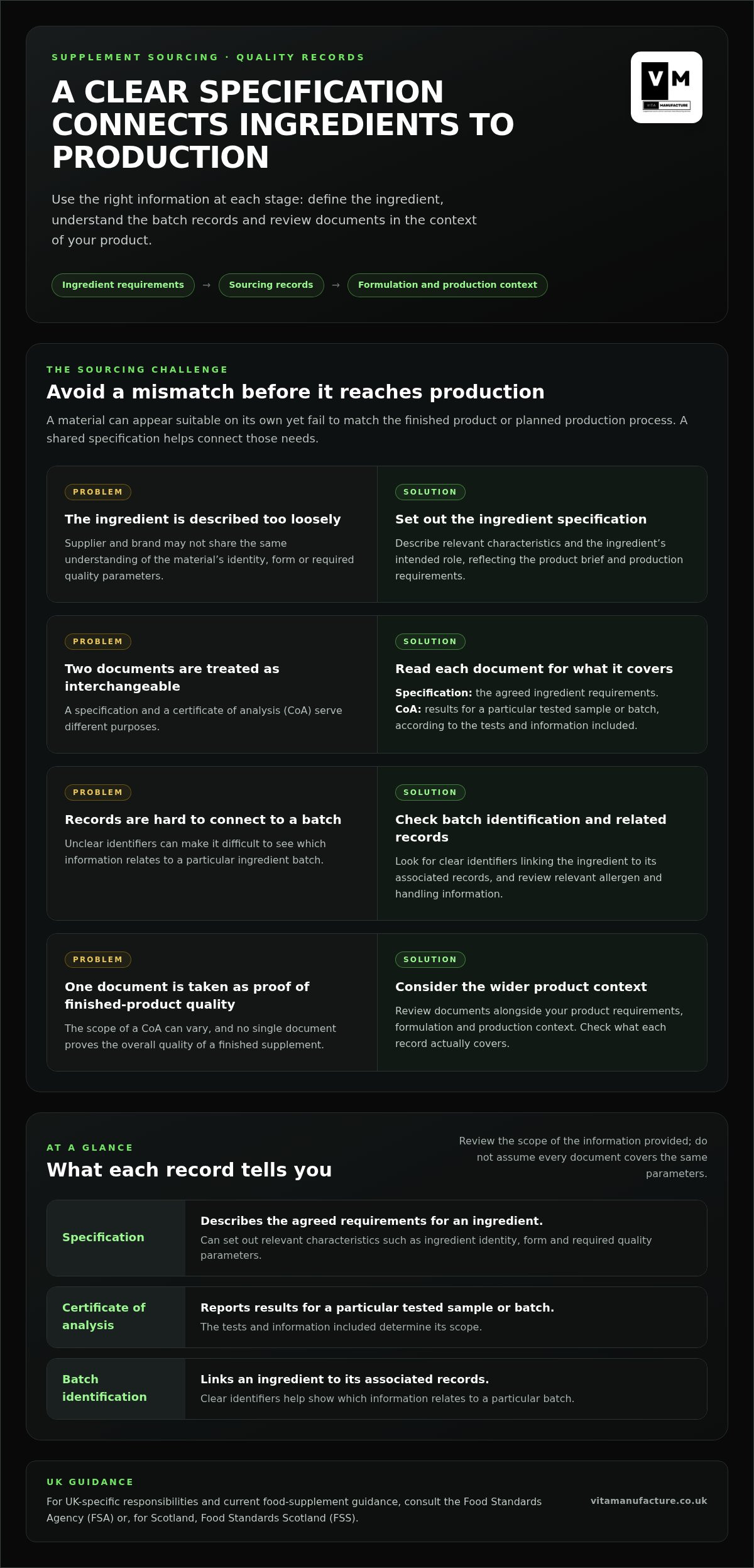
Good sourcing starts with a clear specification. It gives your team and supplier a shared description of the ingredient and its intended role, helping connect sourcing decisions with formulation and manufacturing requirements. Without that alignment, a material may seem suitable in isolation but fail to match the needs of the finished product or planned production process.
A specification can set out relevant characteristics, such as ingredient identity, form and required quality parameters. The details depend on the material and product brief. For example, if a formulation calls for a particular ingredient form, recording that requirement helps prevent a mismatch between what is sourced and what development or production needs.
Which documents help a brand understand an ingredient?
Specifications and certificates of analysis serve different purposes. A specification describes the agreed requirements for an ingredient. A certificate of analysis (CoA) reports results for a particular tested sample or batch, according to the tests and information included in that document. A CoA’s scope can vary, so review what it covers rather than assuming every certificate reports the same parameters.
Batch identification links an ingredient to its associated records as it moves through the supply chain. Check that documentation uses clear identifiers, and review relevant allergen and handling information as part of your sourcing due diligence. These checks help keep records organised and show which information relates to a particular batch.
No single document proves the overall quality of a finished supplement. Consider the documents alongside your product requirements, formulation and production context. For UK-specific responsibilities and current food-supplement guidance, consult the Food Standards Agency (FSA) or, for Scotland, Food Standards Scotland (FSS). Nutrition.gov Dietary Supplements offers additional general information, but it is a US government resource, not UK regulatory guidance.
How does certification contribute to confidence?
Certification can provide useful context about a supplier’s quality approach, but it should not be treated as a blanket assurance about every ingredient, batch or finished product. Vita Manufacture states that it is ISO 22000:2018 certified. This gives buyers a point of reference when considering its quality credentials, but does not replace product-level documentation or establish specific claims about the certification’s scope.
Certification can indicate that a defined system has been assessed against a standard; it cannot, by itself, establish that every product or batch meets your specific requirements. Connect the supplier’s quality information with the ingredient specification, relevant batch records and intended formulation.
When these details are aligned early, sourcing becomes part of product development rather than a separate purchasing exercise. Brands bringing requirements together across ingredients and production can explore ingredient and bulk sourcing support alongside development and manufacturing.
How to compare nutrition supplements suppliers for your project
A useful comparison starts with your requirements, not a league table. Map the capabilities your product needs, the support you want now and what may matter as the brand grows. The same supplier model will not suit every project: a new concept and an established range have different priorities.
What capabilities matter at each brand stage?
At concept stage, ingredient sourcing alone may not address the work ahead. You may also need product development input to connect the idea and intended format with formulation and a manufacturable product. For an established brand, priorities may shift towards coordinating production, maintaining consistency between runs and planning supply continuity as demand or distribution needs change.
Separate immediate requirements from future capabilities. For example, a first product may need development and sourcing support now, while plans to extend a range could make manufacturing coordination or distribution relevant later. A clear brief helps distinguish what the project needs today from what the business may need as it grows. For further criteria on manufacturing fit, see this UK supplement manufacturer guide.
When does an integrated supplier model make sense?
Connected development, sourcing and manufacturing can help keep decisions aligned. An ingredient choice can be considered alongside formulation and production needs, rather than passed between disconnected stages. A separate-partner model gives a brand distinct working relationships for each function, but requires coordination of specifications, information and planning across those relationships. The better fit depends on your team’s capacity and how much coordination you want to manage.
Vita Manufacture brings new product development and ingredient and bulk sourcing together with contract manufacturing, logistics and distribution for vitamins, minerals and dietary supplements. This integrated support suits brands looking to connect product decisions with production and delivery planning. For more detail on formulation considerations, explore the supplement formulation services guide.
As you assess your project’s quality and supply expectations, the Council for Responsible Nutrition UK provides information on the UK food supplement industry. Use industry resources alongside your product brief. They can add context, but your requirements should guide the comparison.
A practical sourcing workflow for nutrition supplement suppliers
A well-prepared brief makes sourcing conversations more productive. It gives nutrition supplements suppliers a clearer view of your concept and helps connect ingredient decisions with development, production and delivery planning. You do not need every technical detail finalised before starting. Distinguish what you know from what still needs development input.
What should a useful supplier brief contain?
Set out the essentials first: who the product is for, its intended format, your concept and its current development stage. Add known ingredient preferences or exclusions, along with packaging considerations that could affect the finished product. Mark each point as a confirmed requirement or an assumption to explore, so early discussion can focus on decisions that still need shaping.
How can sourcing decisions support continuity?
Ingredient choices affect more than the initial sourcing conversation. Consider them alongside production and distribution plans, then keep a record of decisions and relevant documentation as the project develops. This gives everyone involved a shared reference when requirements change or the product moves to another stage. Early supply planning can reduce coordination gaps by linking sourcing decisions with production and distribution needs.
Define the product brief. Record your target audience, product concept, intended format and development stage. Describe the product’s commercial purpose without presenting assumptions as settled specifications.
Separate knowns from open questions. List ingredient preferences, exclusions and packaging considerations you already understand. Identify where you need formulation or development input instead of setting requirements prematurely.
Discuss sourcing against the product needs. Share the brief and explore how ingredient requirements relate to formulation and intended production. Identify documentation or specification questions that need to be resolved as the project advances.
Align development with production planning. Consider how the proposed product and its requirements fit the manufacturing plan. Early coordination can bring potential issues into view before decisions are treated as final, keeping development and production conversations connected.
Plan for movement through the supply chain. Consider how the finished product will be stored, moved and distributed within your chosen model. Document decisions and keep the brief current so sourcing, production and logistics planning refer to the same information.
As requirements develop, keep a clear record of changes to the concept, ingredient preferences, specifications and production assumptions. This is particularly useful when several people contribute to decisions or when a product moves from development into manufacturing. If your plans include growth, note what may need to change later while keeping immediate requirements distinct from longer-term possibilities.
For a broader view of continuity and logistics considerations, the supplement supply chain management guide can help frame supply planning beyond the initial sourcing decision. To put your brief into action, explore ingredient sourcing and product development with Vita Manufacture, connecting early requirements with manufacturing and distribution planning.
How Vita Manufacture supports supplement sourcing from development to delivery
Sourcing works best when it supports the product you intend to make. Vita Manufacture is a UK-based contract manufacturer specialising in vitamins, minerals and dietary supplements. Its support spans new product development, ingredient and bulk sourcing, manufacturing, logistics and distribution. For brands comparing nutrition supplements suppliers, this connected approach brings key project stages into the same conversation.
From ingredient sourcing to manufacturing coordination
An ingredient decision can affect formulation and production requirements, so it helps to consider sourcing alongside the wider product plan. Vita Manufacture combines ingredient and bulk sourcing with new product development and contract manufacturing. Brands can discuss material needs in relation to the product concept and intended manufacturing pathway, rather than treating purchasing as a decision made in isolation.
Bringing related stages together can support clearer coordination. Information from a sourcing discussion can inform development and production planning, while logistics and distribution can be considered as the project progresses. Clear requirements still matter. A concise brief helps define what is known, what needs development input and which decisions remain open.
For example, a founder with an early concept may need to explore how a proposed format and ingredient preferences fit together. An established brand developing another product may already have defined requirements and need to connect sourcing with manufacturing and distribution plans. Vita Manufacture supports brands at both stages, with the discussion shaped around the project.
Plan a sourcing conversation around your next product
Before starting a conversation, bring together the information that will make it practical:
Concept and audience: describe the product idea and who it is intended for.
Format: outline the format you have in mind, even if development may refine it.
Development priorities: note whether you are starting from an early idea or progressing an existing product.
Known requirements: record ingredient preferences, exclusions or other constraints, separating confirmed details from assumptions.
Business plans: explain how the product fits your range and note any future supply-chain considerations.
This preparation helps focus the discussion on how sourcing relates to formulation and manufacturing, and where logistics or distribution should enter the plan. Vita Manufacture also provides regulatory guidance as part of its support, helping brands include relevant considerations as product plans develop.
You do not need every specification resolved before taking the next step. A clear account of your concept, target format and priorities gives the conversation a useful starting point, whether you are building a first product or developing an established range. To explore how sourcing and development can fit your plans, discuss your supplement development project with Vita Manufacture.
Turn your sourcing plans into a confident next step
Your next move does not need to be a fully resolved product specification. Start by identifying the decision that will unlock progress: clarifying the concept, assessing whether your intended format suits the product, or mapping the capabilities your brand will need as it grows. Separate what is essential now from what can be explored during development to give your sourcing conversation a clearer focus.
A strong relationship with nutrition supplements suppliers starts with a shared understanding of your product and ambitions. A clear brief gives the work direction, while expert input can help you make informed choices as the project develops. Whether you are shaping a first idea or preparing to expand an existing range, your sourcing approach can lay the groundwork for the next stage.
Ready to turn your plans into a practical development discussion?Discuss your supplement development project with Vita Manufacture and take the next step towards a product and supply plan with purpose.
Frequently Asked Questions
What are nutrition supplements suppliers?
Nutrition supplements suppliers are businesses that provide services involved in developing and bringing supplements to market. Their work may cover ingredient sourcing, product development, contract manufacturing, packaging or logistics, with different organisations covering different stages. A brand with a finished formulation may need a different combination of support from a founder still shaping a concept. Map the tasks your project requires, then consider how those tasks connect.
How do I assess the quality of a supplement ingredient supplier?
Assess quality by reviewing ingredient information, traceability records and documentation relevant to your intended use, rather than relying on a single certificate. Check whether the material description and batch records are clear and consistent with your product brief. A certificate of analysis can report results for a particular sample or batch, but its contents and scope vary. Use current UK guidance to inform compliance decisions.
Can one supplier support both ingredient sourcing and supplement manufacturing?
Yes. Some partners combine ingredient sourcing with product development and manufacturing, which can help keep requirements connected across project stages. Vita Manufacture provides ingredient and bulk sourcing alongside new product development and contract manufacturing for vitamins, minerals and dietary supplements. This integrated model can suit brands that want sourcing decisions considered in the context of the product and production plan, rather than managed as an isolated task.
What documents should I request when sourcing supplement ingredients?
Depending on the ingredient and project, useful records may include an ingredient specification, a batch-related certificate of analysis, traceability details and relevant allergen or handling information. Review each item for what it actually tells you. A batch document relates to the batch it identifies, while a specification sets out material requirements. Keep records organised against the product brief, and consult current UK guidance when evaluating compliance.
How much ingredient stock should a new supplement brand source?
There is no single stock quantity that suits every new supplement brand. The amount to plan for depends on the product requirements, development progress, production plan and commercial forecast. Before making a commitment, clarify how the ingredient choice fits the formulation and intended manufacturing process. A brief that separates confirmed requirements from open questions can help structure supply planning without assuming a standard order size.
Is a supplier’s certification enough to establish that a supplement is compliant?
No. Certification can provide information about a supplier’s quality-management approach, but it does not establish that every ingredient, finished product, label or marketing claim meets all applicable requirements. Compliance depends on the product and the market in which it will be sold. Treat certification as one part of due diligence, alongside product-specific information, and refer to current UK regulatory guidance when assessing the requirements that apply.