Bromelain Benefits: Formulation Guide for Brands
Potential bromelain benefits include easing sinus symptoms, but the evidence is limited and this pineapple-derived enzyme isn’t suitable for everyone. It can cause side effects and interact with medicines, so weigh possible uses against personal health conditions and treatment.
It’s understandable to want a clear picture of potential benefits and risks before considering a supplement. This guide explains what bromelain may do, what research suggests about sinus symptoms, and which side effects and medicine interactions matter.
You’ll also learn why pregnancy, breastfeeding and certain health conditions make it especially important to speak with a healthcare professional. The aim is to put bromelain’s potential benefits and safety considerations in context, so you can assess claims with care.
Table of Contents
What are the most common side effects of bromelain?
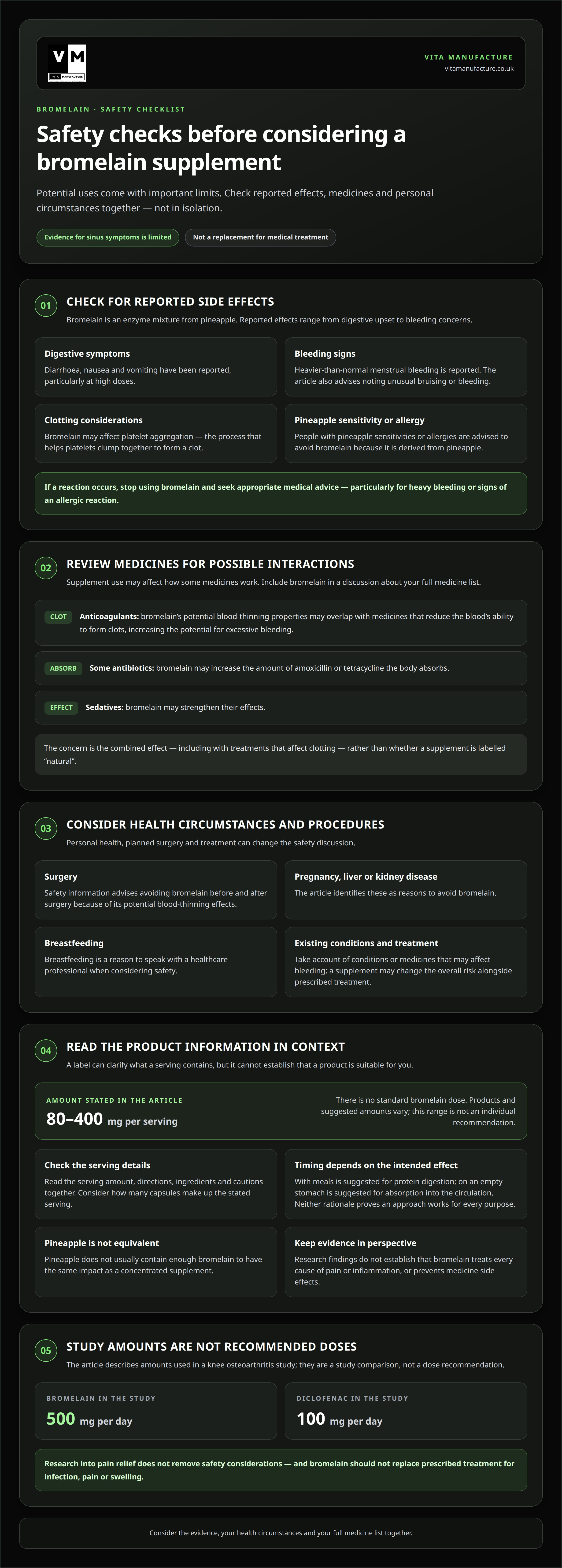
Bromelain is an enzyme mixture from pineapple that acts on proteins, including those involved in inflammation. Its effects may include changes to inflammatory signalling and immune activity, which researchers have examined for pain relief. These possible actions do not make it suitable for everyone. Reported side effects include diarrhoea, nausea and vomiting, particularly at high doses. Heavier-than-normal menstrual bleeding is also reported, making bleeding risk an important part of any safety assessment.
Blood clotting deserves particular attention. Bromelain may affect platelet aggregation, the process by which platelets clump together to help form a clot. If clotting is reduced, bleeding may become more likely, especially when bromelain is taken with anticoagulants or other treatments that affect clotting. This potential interaction matters before procedures as well as during everyday supplement use. People with pineapple sensitivities or allergies are advised to avoid bromelain, since an enzyme derived from pineapple may trigger a reaction.
Research into pain relief does not remove these safety considerations. In a knee osteoarthritis study, according to the U.S. National Library of Medicine, bromelain was given at 500 mg per day, while diclofenac was given at 100 mg per day. Those study amounts describe a comparison, not a recommended dose for readers. The reported anti-inflammatory effects are a subject of research; they do not establish that bromelain treats every cause of pain or inflammation.
Risk can also depend on a person’s health. Safety information advises avoiding bromelain before and after surgery because of its potential blood-thinning effects. Pregnancy, liver disease and kidney disease are also reasons to avoid it. These cautions matter particularly if a person has a condition or takes treatment that can affect bleeding. Taking bromelain alongside a prescribed medicine may change the overall risk, even if the supplement seems well tolerated on its own.
For a practical safety review, note any digestive symptoms, unusual bruising or bleeding, and the timing of a planned operation. Consider your full medicine list, including anticoagulants, rather than assessing a supplement in isolation. Reported side effects range from stomach upset to bleeding concerns, so both intended use and personal circumstances matter. If a reaction occurs after taking bromelain, stop using it and seek appropriate medical advice, particularly for heavy bleeding or signs of an allergic reaction.
Does bromelain interact with medicines (drug interactions)?
Yes. Bromelain supplements may affect how some medicines work, so consider them alongside prescribed treatment. Bromelain may increase the amount of amoxicillin or tetracycline the body absorbs. It may also strengthen the effects of sedative medicines. These possible interactions make medicine use central to assessing safety, rather than treating a supplement as separate from a person’s usual medicines.
There is no standard bromelain dose, and products can differ in the amount per serving. A stated range is 80-400 milligrams per serving, but this does not establish a suitable dose for an individual. Suggested amounts also vary according to the intended use, such as digestion or inflammation. That variation is one reason a dose from a product label or another person’s routine should not be treated as a universal recommendation.
Timing may also depend on the intended effect. Taking bromelain with meals is suggested when the aim is to support protein digestion. Taking it on an empty stomach is suggested when the aim is absorption into the circulation. These are different rationales, not proof that either approach works for every purpose. Bromelain supplements should not replace medical treatment, including prescribed medicines for infection, pain or swelling.
Eating pineapple is not necessarily equivalent to taking a bromelain supplement. Pineapple does not usually contain enough bromelain to have the same impact as a concentrated supplement. The enzyme is extracted from pineapple stem or fruit, but the amount in food differs from a measured supplement serving. So eating pineapple does not mean you are getting the same dose or effects as from a capsule.
Product information can help distinguish one supplement from another. Read the serving amount, directions, ingredient list and cautions together, rather than judging a product by the word “bromelain” alone. For example, a label’s amount per serving needs to be considered alongside how many capsules make up that serving. This clarifies what the product contains, but cannot establish whether it is suitable alongside a medicine.
Evidence limitations matter, too. Findings about bromelain for inflammation, wounds or digestion do not prove that it treats a condition or prevents medicine side effects. If you take amoxicillin, tetracycline or a sedative, include bromelain in the conversation about your medicines before starting supplementation. For brands translating ingredient research into a responsible product concept, supplement product development can help shape the formulation brief and its supporting information.
Interactions with anticoagulant medicines
Bromelain’s potential blood-thinning properties make anticoagulants an important interaction to consider. Anticoagulant medicines reduce the blood’s ability to form clots; taking bromelain with them may increase the potential for excessive bleeding. The concern relates to supplement use, not simply eating pineapple. If you are prescribed an anticoagulant, include bromelain when discussing medicines and supplements with a healthcare professional, rather than adding it to your routine independently.
The practical concern is the combined effect on bleeding, not whether bromelain is labelled natural. A supplement and an anticoagulant can both influence clotting, so their effects may overlap. This matters particularly if you have a planned operation, a bleeding concern or treatment that already affects clot formation. Before a procedure, tell the surgeon or anaesthetist about bromelain and prescribed medicines. Don’t stop or change an anticoagulant without medical advice.
Antibiotics are another potential interaction to discuss. Bromelain may increase how much amoxicillin or tetracycline the body absorbs. A supplement could therefore affect exposure to these medicines rather than simply add a separate nutrition product. If you are prescribed either antibiotic, mention bromelain before taking it alongside treatment. The same applies if an antibiotic course begins after you have started using the supplement: include it in the medicine discussion.
Sedatives also need consideration because bromelain may strengthen their effects. Tell a healthcare professional about prescribed and non-prescribed products, including supplements taken for digestion or inflammation. Eating pineapple is not usually equivalent to taking a bromelain supplement, because pineapple typically does not contain enough bromelain to have the same impact. Describe food intake and concentrated supplements separately when discussing possible interactions.
A useful medical review starts with a clear list: the bromelain product and serving directions, each prescribed medicine, and any planned procedure. Include amoxicillin, tetracycline, sedatives and anticoagulants by name where relevant. Product directions cannot establish that combining a supplement with a medicine is safe, and bromelain should not replace prescribed treatment. If a clinician advises against taking bromelain with a particular medicine, follow that advice rather than adjusting the medicine or supplement yourself. This makes the interaction assessment specific to your treatment and intended use.
Sinusitis and nasal symptoms
Bromelain has been studied for sinusitis, including nasal symptoms and recovery time. In one sinusitis trial, people taking bromelain recovered in 6.6 days, compared with eight days for people taking placebo. Those figures describe recovery in that trial, not a guaranteed timeline for an individual. They also don’t establish that every symptom, such as congestion or mucus, improved at the same rate. Sinusitis can involve several symptoms, so the outcome measured matters when interpreting the finding.
A 2021 review found bromelain may help treat sinusitis and may reduce symptom duration, particularly in children with severe cases. The wording matters: this is a possible effect, not proof that bromelain replaces established care. A separate pilot study investigated chronic sinusitis symptoms while participants took bromelain daily for 3 months. A pilot study can explore a potential approach, but its findings shouldn’t be treated as conclusive evidence for every person with persistent nasal symptoms.
Mucus is one part of the sinus picture, but available findings don’t establish that bromelain clears it directly. Bromelain is an enzyme mixture that helps break down protein into smaller amino acids. This explains its role in protein digestion, but does not by itself demonstrate a decongestant effect. When assessing sinus claims, distinguish a proposed biological mechanism from measured outcomes such as recovery time or reported symptoms.
The number of participants can help put a finding in context. A sinusitis trial involved 116 people, while the chronic sinusitis pilot examined daily use over 3 months. These study details describe different investigations and shouldn’t be combined as if they were one larger trial. The 2021 review offers another level of evidence, but its conclusion remains cautious: bromelain may help, especially for children with severe sinusitis. The results don’t establish the same effect for every age group or severity.
Evidence for one condition cannot automatically be applied to another. Research on bromelain and osteoarthritis, for example, concerns a different health problem and cannot establish an effect on nasal function or sinus mucus. When assessing claims, look at the specific symptom studied, the participant group and the comparison used, such as a placebo. This keeps bromelain’s potential effects in perspective: research on sinusitis is worth examining, but it does not show that a supplement is a proven treatment for all nasal symptoms.
Health conditions and medicines to discuss with a provider
Bromelain’s possible effects matter most when considered alongside a person’s health and treatment. Before taking a supplement, tell a healthcare professional about diagnosed conditions, pregnancy or breastfeeding, and every medicine you use. Include medicines prescribed for long-term conditions as well as products bought without prescription. Bromelain is derived from pineapple, so a known pineapple allergy is also relevant. This information helps the professional assess the intended use against individual risks, rather than considering the supplement alone.
Some circumstances call for particular caution. Safety information advises people with liver or kidney disease, pregnant women and people about to undergo surgery to avoid bromelain because of its potential blood-thinning properties. If you are preparing for an operation, tell the surgeon or anaesthetist about supplement use beforehand. After surgery, seek their advice before taking bromelain. These discussions matter even when the intended purpose is to address inflammation or relieve symptoms.
Medicine interactions deserve equal attention. Bromelain may increase the body’s absorption of antibiotics such as amoxicillin or tetracycline, and may strengthen the effects of sedatives. Its potential effects on clotting also make anticoagulants important to mention. Rather than relying on a product label alone, give the healthcare professional the supplement name, serving directions and a complete medicine list. Include medicines taken occasionally, such as a sedative, because the combination informs an interaction assessment.
Studies of bromelain examine different outcomes, so evidence for one use cannot establish safety or effectiveness for every condition. Research into osteoarthritis, for example, does not settle whether bromelain may help with a separate disease. Nor does a proposed anti-inflammatory effect show that the supplement can replace prescribed treatment. If you are considering a product for stomach or digestive concerns, explain your symptoms and any existing diagnosis. The condition and full treatment plan shape the discussion.
A useful conversation is specific. Explain why you are considering bromelain, whether you have reacted to pineapple, and whether you are pregnant, breastfeeding or approaching surgery. Mention any liver or kidney diagnosis and list anticoagulants, antibiotics and sedatives by name. This gives the healthcare professional context to assess possible interactions and suitability. If a new symptom appears after starting a supplement, note when it began and what else you were taking, then raise those details promptly.
Vita Manufacture
Vita Manufacture can help turn ingredient research into a considered supplement concept. If you’re assessing bromelain for a product, evidence around possible uses, side effects and medicine interactions can inform formulation decisions and clear product communication. New Product Development supports work on a new supplement concept, while Private Label Supplements and Contract Manufacturing offer routes for bringing supplement products to market. The right direction depends on your product goals and development needs, not on treating early research as proof of a health outcome. A careful brief can connect the ingredient rationale with the intended format and audience. To discuss your supplement project, contact Vita Manufacture.
Build your next step on sound evidence
For a supplement brand, the opportunity is to turn ingredient interest into a carefully considered product proposition. Potential bromelain benefits may inform that proposition, but the concept also needs clear boundaries around evidence, intended use and safety communication. A disciplined development process keeps these considerations connected as the idea progresses towards a market-ready product.
Vita Manufacture supports this journey through New Product Development, Contract Manufacturing and Private Label Supplements. These services can suit different stages, from shaping an original concept to developing a product under a private label. Start by defining what your brand wants the supplement to do, who it is for and how its rationale will be communicated responsibly.
Have a bromelain concept you’re ready to explore? Contact Vita Manufacture to discuss the direction of your project. With a clear brief and thoughtful development, you can move from an ingredient idea towards a stronger, more informed brand proposition.
Frequently Asked Questions
Does bromelain have any health benefits?
Bromelain may have health benefits, but findings vary by use and remain limited. Research has examined sinus symptoms and pain and stiffness related to osteoarthritis. These potential benefits don’t establish bromelain as a treatment or show that it works for everyone. When weighing a product, consider the specific outcome studied, your health circumstances and any medicines you take, rather than relying on broad benefit claims.
What can bromelain help?
Research has explored bromelain for sinusitis symptoms and pain and stiffness related to osteoarthritis. A review suggests it may reduce the duration of sinus symptoms, particularly in children with severe cases. Claims about bromelain benefits should be tied to the specific outcome and group studied, not treated as proof of a general effect. Research on nasal symptoms, for example, doesn’t show that bromelain helps with an unrelated concern such as leg swelling.
Does bromelain have any contraindications for the thyroid?
Include thyroid conditions and thyroid medicines in a safety discussion before taking bromelain. Don’t assume a supplement is suitable simply because it’s derived from pineapple or sold for general wellness. Share the name of your thyroid medicine, any other treatments and why you’re considering bromelain with a healthcare professional. They can assess the full combination, including other conditions and medicines that may affect bleeding or sedation.
Does bromelain help reduce bloating in the stomach and legs?
Bromelain shouldn’t be relied on to reduce stomach bloating or swelling in the legs. Its role in breaking down protein relates to digestion, but this mechanism doesn’t establish relief from bloating. Research on sinus symptoms or osteoarthritis also doesn’t demonstrate an effect on leg swelling. Persistent or worsening swelling, or bloating alongside other concerning symptoms, calls for medical assessment to identify the cause rather than self-treating with a supplement.
Does bromelain interact with foods or drinks?
Eating pineapple usually doesn’t provide the same bromelain impact as taking a supplement. The amount in food differs from that in a concentrated product, so eating pineapple shouldn’t be treated as equivalent to taking capsules. Key interaction concerns involve certain medicines, including anticoagulants, some antibiotics and sedatives. Mention supplements and relevant dietary products during a medicine review, especially if you have a pineapple allergy or sensitivity.
How much bromelain should I take?
There’s no standard bromelain dose that suits everyone, and product servings can differ. Don’t copy a dose used in a study or another person’s routine as personal instructions. The intended use, product directions, health conditions and medicines all matter. Before starting a supplement, discuss the amount on its label with a healthcare professional, particularly if you take anticoagulants, antibiotics or sedatives, are pregnant or breastfeeding, or have surgery planned.
How does bromelain work (mechanism of action)?
Bromelain is an enzyme mixture that breaks proteins into smaller components, including amino acids. This protein-digesting action helps explain why researchers have studied it for digestion. They have also examined possible effects on inflammation and inflammatory signalling. These mechanisms may help explain research into pain or swelling, but a proposed biological action doesn’t prove a useful effect in people. Outcomes depend on the condition and measure studied.
How does it work?
In practical terms, bromelain’s enzyme activity acts on protein rather than functioning as a general-purpose remedy. Researchers have examined whether its other biological effects could influence inflammation, but laboratory findings don’t automatically show what happens in people. For example, a change in an inflammatory marker isn’t the same as demonstrated symptom relief. This distinction helps separate a plausible mechanism from evidence that a supplement improves a health outcome.