Logistics and Distribution for Supplement Brands: 2026 Guide
The greatest threat to your supplement brand's bottom line isn't product efficacy; it's the operational friction between manufacturing and dispatch. When you rely on disconnected partners, managing your logistics and distribution quickly becomes an exhausting cycle of stockouts, compromised batch integrity, and mounting overheads. How do you scale across retail and e-commerce channels without risking regulatory compliance or sacrificing margins?
You already recognise how vulnerable active formulations become once they leave a controlled facility, particularly when third-party handlers treat sensitive wellness products like ordinary dry freight. You shouldn't have to micromanage fragmented vendors just to protect your reputation. Discover how integrated logistics and distribution streamline your supplement supply chain, preserve product integrity, and accelerate commercial growth. From ISO-certified storage protocols and digital batch traceability to frictionless onward fulfilment, this 2026 guide explores how centralising your supply chain turns operational complexity into a powerful commercial advantage.
Table of Contents
What Is Logistics and Distribution in Modern Supplement Manufacturing?
Critical Compliance and Quality Standards in Supplement Logistics
Decentralised 3PLs vs Integrated Manufacturing and Distribution
How to Build an Efficient Distribution Strategy for Scaling Brands
Scaling Your Brand with an Integrated Supply and Logistics Partner
What Is Logistics and Distribution in Modern Supplement Manufacturing?
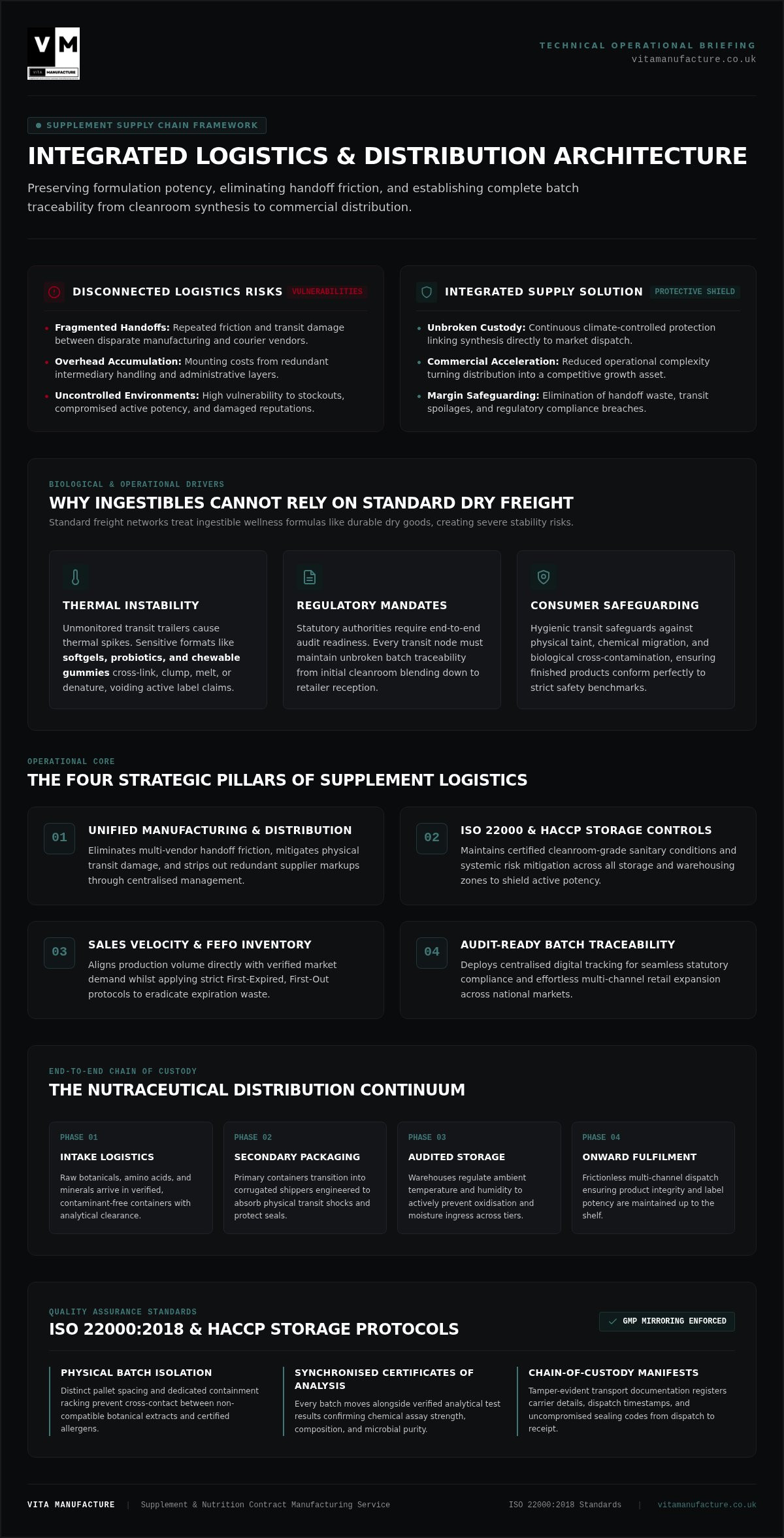
Modern supplement manufacturing doesn't conclude at the cleanroom seal. In the nutraceutical sector, specialised logistics and distribution refers to the precise, climate-controlled handling and transport of active formulations from production line to market shelf. Whilst conventional logistics focuses purely on physical freight movement, supplement distribution acts as an unbroken biological shield. It seamlessly links ingredient synthesis, secondary packaging, and final commercial destinations without compromising formulation stability.
Poor transit execution carries severe commercial consequences. Sensitive vitamins, botanicals, and live cultures degrade rapidly when exposed to uncontrolled heat or humidity. A single thermal breach during transport can denature active compounds, void label claims, and destroy customer trust before a bottle even reaches the consumer. Maintaining precise chain-of-custody protocols across every domestic transit corridor protects your product efficacy and preserves your operating margins.
The Core Components of the Nutraceutical Supply Chain
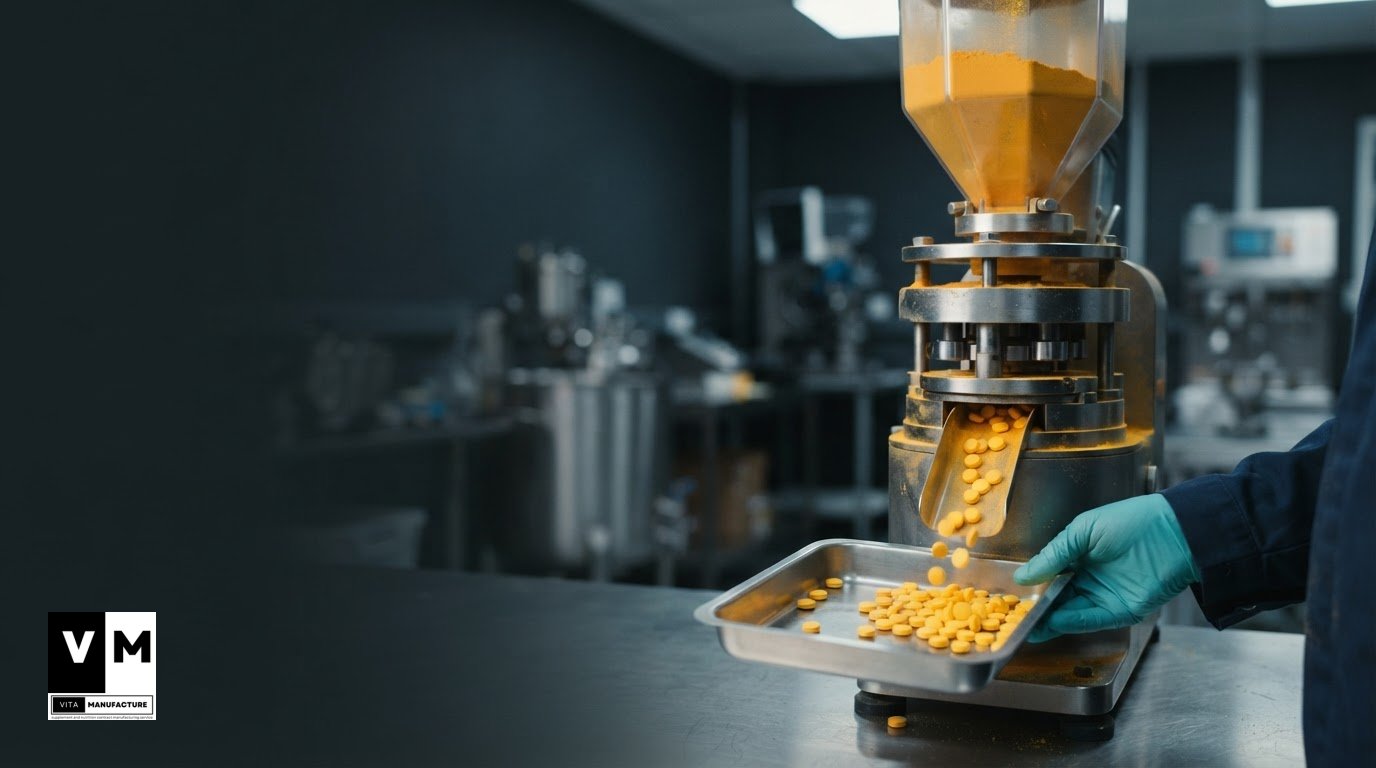
The journey begins with intake logistics. Raw botanical extracts, amino acids, and minerals must arrive in verified, contaminant-free containers with full analytical clearance. Once blended and tableted or encapsulated within controlled cleanrooms, primary containers transition into robust secondary corrugated shippers designed to absorb physical transit shocks. These goods move directly into audited warehouse environments engineered to regulate ambient temperature and relative humidity, actively preventing oxidisation and moisture ingress across all inventory tiers.
Why Ingestible Products Demand Specialised Distribution Channels
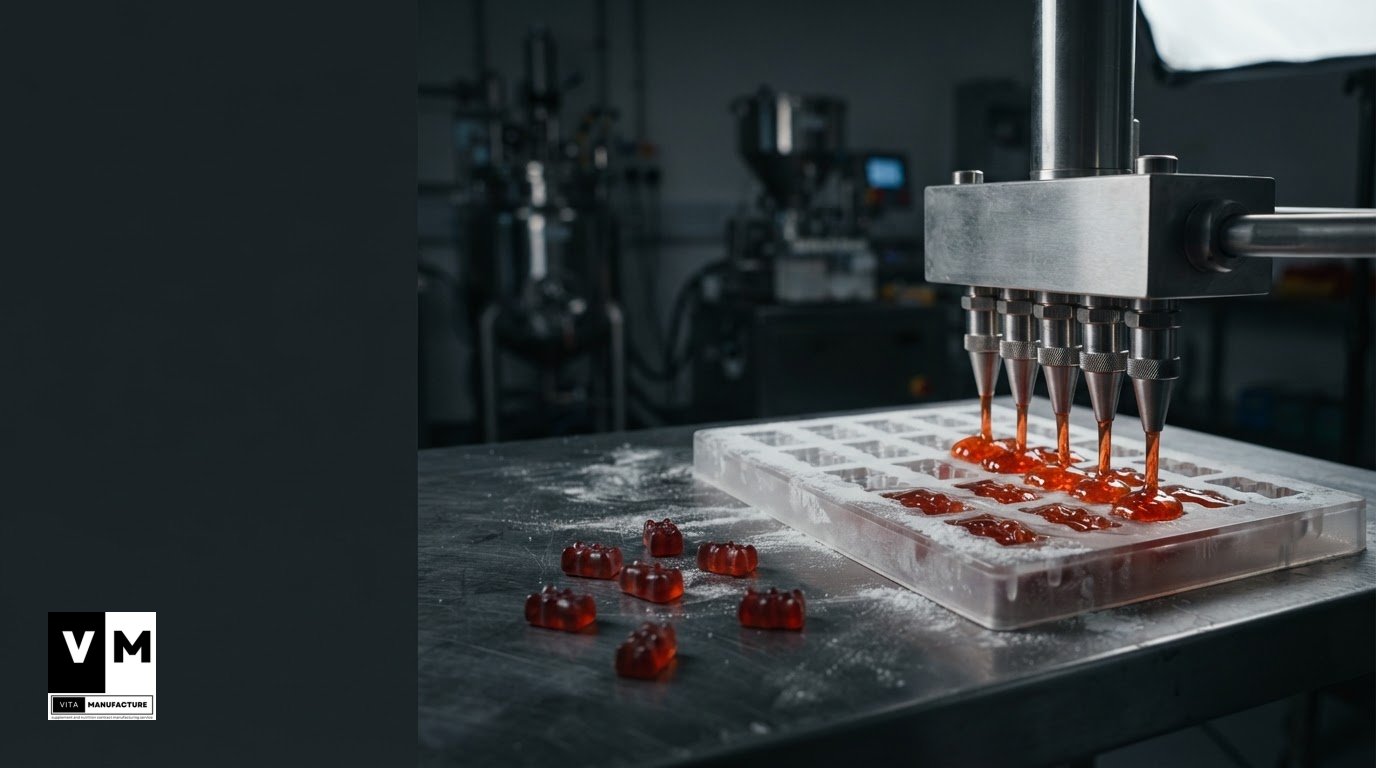
Standard freight networks are built for durable consumer dry goods, not bioavailable wellness formulas. Subjecting sensitive delivery formats like softgels, probiotics, or chewable gummies to standard ambient haulage invites disaster:
Thermal instability: Heat spikes inside unmonitored transit trailers quickly cause softgels to cross-link, clump, or melt into unusable blocks.
Regulatory compliance: Statutory authorities require rigorous batch traceability across every transport node, ensuring complete audit trails from manufacturing blending to retailer reception.
Consumer safeguarding: Clean handling prevents physical taint, chemical migration, or biological cross-contamination, ensuring every unit matches pristine safety benchmarks.
By treating distribution as an active extension of quality assurance, ambitious brands protect their formulations, satisfy statutory mandates, and build lasting consumer equity.
Critical Compliance and Quality Standards in Supplement Logistics
Maintaining regulatory compliance across your distribution network demands far more than basic warehouse shelving. Modern nutraceutical warehousing relies on certified ISO 22000 management systems that enforce rigorous food safety, hygienic handling, and systemic risk mitigation across every storage zone. When handling ingestible wellness formulations, your downstream storage protocols must mirror the strict sanitary controls executed during laboratory compounding.
Hazard Analysis Critical Control Point (HACCP) principles dictate that vulnerable transit points receive continuous oversight. Standard logistics operations frequently overlook how biological cross-contamination occurs between contrasting lots. Robust batch segregation techniques prevent physical mingling of disparate botanical allergens, whilst detailed documentation trails ensure full legal compliance across commercial channels:
Physical batch isolation: Distinct pallet spacing and dedicated containment racking prevent cross-contact between non-compatible botanical extracts and certified allergens.
Synchronised Certificates of Analysis: Every production batch moves alongside verified analytical test results confirming chemical assay strength and microbial purity.
Chain-of-custody manifests: Tamper-evident transport documentation registers carrier details, dispatch timestamps, and uncompromised sealing codes from dispatch to receipt.
ISO 22000 Standards and Good Manufacturing Practice
Adhering to ISO 22000:2018 standards guarantees that handling facilities mirror the hygiene protocols of certified cleanrooms. This alignment eliminates contamination risks during secondary packing and outbound palletisation. Understanding these regulatory touchpoints is crucial, and reviewing a comprehensive guide to supplement supply chain management UK clarifies how certified procedures preserve brand integrity. These protocols directly satisfy statutory Current Good Manufacturing Practices (cGMP) governing product holding and distribution.
Environmental Monitoring, Humidity, and Temperature Control
Capsule shells demand strict atmospheric moderation. Hard-shell vegetarian and gelatin capsules require a relative humidity maintained between 35% and 50% alongside temperatures below 25°C to avoid shell brittleness or moisture sorption. Pectin and gelatin gummies require continuous digital logging to track thermal spikes that cause melting. If transport temperature sensors detect out-of-specification thresholds, automated quarantine workflows instantly isolate affected inventory to prevent unverified market distribution.
Aligning with a partner that integrates compliant storage with manufacturing simplifies these complexities. Discover how partnering with an accredited team at Vita Manufacture gives your brand access to ISO 22000-certified logistics and distribution infrastructure designed specifically for scaling wellness enterprises.
Decentralised 3PLs vs Integrated Manufacturing and Distribution
Are your operational margins leaking through the cracks between separate suppliers? Many founders assume that outsourcing manufacturing to one contractor and order dispatch to a generalist third-party logistics firm creates ultimate flexibility. In practice, this handoff friction introduces administrative drag, misaligned timelines, and unrecoverable product loss. Consolidating production alongside integrated logistics and distribution replaces finger-pointing with unified accountability, protecting both your bottom line and your brand reputation.
When you unify these functions under a single roof, administrative workloads plummet. Your team stops reconciling conflicting manifests across different partner platforms. Instead, a transparent digital client portal gives you real-time visibility over production runs, quarantine releases, and warehouse stock levels in one centralised dashboard.
The Hidden Risks of Disjointed Third-Party Fulfilment
Fragmented supply chains create operational blind spots during critical sales surges. When retail purchase orders spike or quality audits require immediate batch quarantine, disconnected providers struggle to communicate quickly. Every intermediate haul between factory and secondary depot also introduces physical risks, as pallet consolidation and rough handling often crush secondary packaging. As discussed in our analysis of choosing a UK supplement manufacturer, vetting a partner's broader logistics capabilities is vital for sustained reliability.
Commercial Advantages of Single-Source Supply Partnerships
Eliminating third-party hauliers between production and storage delivers substantial commercial benefits across national sales channels:
Accelerated time-to-market: Finished goods roll directly off packaging lines into accredited, on-site storage facilities, shaving days off trade dispatch schedules.
Margin preservation: Bypassing external freight shuttles removes redundant pallet transfer fees, receiving surcharges, and secondary cross-dock handling expenses.
Seamless compliance oversight: Quality managers maintain custody from bulk blending through to pallet dispatch, preventing batch divergence or paperwork errors.
Streamlining your logistics and distribution through an integrated partner turns complex operational handoffs into a consolidated engine for commercial expansion.
How to Build an Efficient Distribution Strategy for Scaling Brands
Scaling a supplement brand requires synchronising production capacity directly with market demand. Guesswork in production volume inevitably leads to dead stock write-downs or stockouts that halt commercial momentum. Structuring an effective logistics and distribution strategy begins by calculating precise batch sizing based on audited historical sales velocity rather than wishful sales forecasts. When your production schedules reflect real-time consumption rates, you safeguard working capital whilst keeping fresh inventory flowing continuously to your retail channels.
Reorder points must be calibrated dynamically. Account for raw ingredient sourcing lead times, testing turnarounds, and final clean packaging windows so replenishment orders trigger long before inventory dips into safety buffers. Preparing trade documentation, complete with commodity codes and verified Certificates of Analysis, guarantees rapid passage through national retail distribution networks and international customs checkpoints.
Inventory Control and Expiry Management Protocols
Strict First-Expired, First-Out (FEFO) warehouse management is non-negotiable for active nutraceuticals. Unlike generic consumer goods governed by standard First-In, First-Out flows, dietary formulas contain active nutrients with distinct stability profiles. Allocating inventory by expiry date ensures your retail partners and consumers always receive products with maximum shelf-life viability. When managing complex ranges of private label supplements, integrating real-time inventory reconciliation software prevents overselling, reduces obsolete stock write-offs, and maintains pristine brand credibility.
Streamlining Domestic Logistics and Cross-Border Transit
Operational resilience depends on anticipating transit vulnerabilities before disruptions occur. Whether coordinating dedicated delivery vehicles or relying on commercial transport partners supported by Fleetmaxx Solutions, maintaining reliable fleet operations and streamlined trade paperwork keeps consignments moving efficiently:
Standardised consignment paperwork: Prepare harmonised bills of lading, safety data sheets, and verified batch certificates to ensure effortless acceptance at national distribution centres.
Customs compliance dossiers: Maintain complete ingredient dossiers and country-of-origin documentation to eliminate border inspection holds when exporting overseas.
Transport contingency routing: Establish pre-approved secondary carrier agreements to maintain delivery schedules during peak seasonal freight crunches.
Ready to streamline your operational pipeline and scale your operations without friction? Explore how you can partner with Vita Manufacture for integrated logistics and manufacturing to build an agile, resilient supply chain tailored to your brand's growth targets.
Scaling Your Brand with an Integrated Supply and Logistics Partner
Rapid commercial expansion exposes operational weakness faster than almost any other business phase. As your order volumes surge across multiple merchant platforms and brick-and-mortar retailers, managing separate production facilities and warehouse networks becomes unsustainable. Consolidating production with unified logistics and distribution provides the structural stability required to scale sustainably, ensuring product quality and delivery speed remain constant as output grows.
Working with a single provider fundamentally simplifies your audit readiness. Centralised batch management creates an unbroken lineage from bulk botanical sourcing to end dispatch. When trade partners, major platforms, or national regulatory authorities request compliance verification, your team doesn't have to assemble documents from disparate contractors. A dedicated account manager oversees the entire sequence, resolving operational bottlenecks before they impact scheduled retail rollouts.
Real-Time Oversight Through Dedicated Digital Portals
Modern supply management demands absolute visibility. A transparent digital client portal grants founders 24/7 access to critical production milestones, inventory counts, and dispatch tracking. Instead of chasing email updates across time zones, you can review analytical release records, batch testing results, and storage parameters instantly. Automated inventory threshold notifications alert you when stock levels reach replenishment triggers, empowering your business to plan production runs well ahead of seasonal market surges.
Unifying Formulation, Production, and Fulfilment Operations
Direct collaboration between formulation chemists, production staff, and dispatch teams creates profound operational efficiencies:
Packaging compatibility: Formulation engineers design primary containers and outer shipping cartons to withstand real-world transport conditions, eliminating handling damage.
Synchronised dispatch: Packaging and labelling operations coordinate directly with domestic hauliers, ensuring finished goods move straight into active distribution lanes.
Comprehensive partnership: Reviewing our guide on health supplement manufacturers UK highlights the commercial power of end-to-end operational alignment.
Selecting an experienced contract partner who handles formulation, production, packaging, and onwards distribution transforms your supply chain into a decisive market advantage. Review your current manufacturing and fulfilment setup today to discover how integrated logistics and distribution can safeguard your operating margins and unlock sustainable growth.
Future-Proof Your Supply Chain for Sustainable Expansion
Fragmented vendor handoffs and transit vulnerabilities shouldn't compromise your brand's hard-won commercial momentum. Building an enduring wellness enterprise demands more than exceptional formulations; it requires an unbroken chain of custody from clean compounding to retail intake. Unifying your operations under a single standard of excellence safeguards product potency, guarantees food safety compliance, and protects your margins against administrative drag.
You don't have to navigate these scaling hurdles alone. Partner with Vita Manufacture to streamline your supplement logistics and distribution. Backed by certified ISO 22000:2018 management systems, a transparent digital client portal, and comprehensive support from custom formulation to final delivery, we provide the operational resilience your business deserves. Take command of your supply pipeline today and expand your market reach with complete confidence.
Frequently Asked Questions
What is the difference between supplement logistics and standard freight distribution?
Supplement logistics requires strict climate control, batch segregation, and active chain-of-custody tracking that standard freight networks don't provide. While standard distribution moves non-perishable consumer dry goods, nutraceutical distribution manages ingestible active compounds vulnerable to heat, moisture, and microbial cross-contact. Specialised handlers implement food safety protocols, validated sanitisation, and regulatory documentation checks at every transition point to protect formulation stability and legal compliance.
How does ISO 22000 certification impact the logistics and distribution process?
ISO 22000:2018 certification establishes an internationally recognised food safety management framework throughout the storage and transport chain. In our logistics and distribution network, this standard enforces formal hazard analysis, strict hygiene benchmarks, and allergen control across every handling touchpoint. It ensures your finished supplements are stored in pristine, audited environments that actively prevent contamination, guaranteeing audit-ready compliance for UK retailers and regulators alike.
Can dietary supplements be stored in ambient warehousing without losing potency?
Most supplements require tightly controlled conditions rather than standard ambient storage. While some durable tablets tolerate moderate ambient temperatures, sensitive delivery systems like softgels, gummies, and live cultures degrade rapidly if ambient conditions fluctuate. Humidity exceeding 50% or unmonitored temperature spikes can soften capsules, trigger oxidisation of active botanicals, and deplete declared potency well before the stated expiry date. Controlled storage preserves formula stability.
What is FEFO and why is it vital in nutraceutical distribution?
First-Expired, First-Out (FEFO) is a warehouse management protocol that dispatches inventory based on expiration dates rather than warehouse arrival times. This practice is vital for supplements because active vitamins, botanical extracts, and enzymes lose efficacy over time. Prioritising batches with earlier expiry dates guarantees that retail partners and consumers receive products with maximum active shelf life, eliminating obsolete inventory write-downs and protecting brand reputation.
How does an integrated manufacturer reduce distribution lead times for brands?
An integrated manufacturer eliminates the intermediate shipping phase between the factory and an external storage facility. Once secondary packaging and laboratory release are complete, finished batches transfer directly into on-site warehousing within the same operational perimeter. This structural unity cuts days off trade dispatch schedules, removes double-handling delays, and streamlines communication between batch formulation teams and transport dispatchers for faster retail fulfilment.
What happens if a supplement batch fails temperature checks during transit?
When transport data loggers record temperature excursions exceeding validated thresholds, the affected consignment enters an immediate digital and physical quarantine. Quality assurance specialists assess the excursion's duration and thermal severity against stability data. If degradation compromises label potency or structural integrity, the batch is safely rejected rather than delivered to retailers. This strict quarantine protocol prevents unverified or sub-potent inventory from ever reaching consumers.
How do brands maintain inventory visibility when outsourcing logistics operations?
Modern brands maintain full visibility through centralised, cloud-based digital portals provided by their manufacturing and fulfilment partner. Rather than relying on sporadic email updates, founders access real-time stock counts, active batch statuses, and dispatch milestones directly from an online dashboard. Integrating your logistics and distribution with a transparent portal ensures complete oversight of inventory velocity, batch traceability documentation, and upcoming replenishment requirements across your commercial network.